




In Crete, the land has always been more than a landscape.
For generations, people have looked to the mountains, fields and wild hillsides not only for food, but for plants that became part of everyday rituals and traditional knowledge. Herbs were gathered, dried, brewed, cooked with and shared within families, knowledge passed quietly from one generation to the next.
Walk through the Cretan countryside and that relationship is still present today.
Wild thyme grows between rocks warmed by the sun. Sage releases its unmistakable scent when brushed against. Oregano, rosemary and other aromatic plants thrive in a landscape shaped by sea winds, long summers and rugged terrain.
To understand Crete, you have to understand its land.
And sometimes, you have to walk through it.
An Island of Wild Aromas
There is something distinctive about the scent of the Cretan landscape.
It changes as you move through it: the earthy aroma of olive groves, herbs growing wild along the hillsides, dry grasses warmed by the afternoon sun and, somewhere in the distance, the salt of the sea.
For centuries, aromatic plants have formed part of daily life on the island. They found their way into kitchens and cups of herbal tea, while knowledge surrounding them became intertwined with local customs and traditional approaches to wellbeing.
Rather than being viewed as something separate from everyday life, nature was simply part of it.
And in many corners of Crete, it still is.
Wisdom Passed From One Generation to the Next
Long before wellness became an industry, wellbeing in Crete was rooted in simplicity.
A herb gathered from the mountains.
A warm infusion prepared at home.
Seasonal food from the land.
Olive oil used generously at the table.
Time spent outdoors.
Rest.
Community.
The knowledge of local plants was often practical and deeply personal, passed between generations through observation and experience rather than written instructions.
Grandparents knew when certain herbs appeared. Families had their preferred infusions. Recipes and traditions changed from village to village and sometimes from one household to another.
This is perhaps one of the most beautiful aspects of Cretan herbal tradition: it was never simply about the plant itself.
It was about the relationship between people and place.
Meet the Herbs of the Cretan Landscape
Once you begin to look more closely, what first appears to be a rugged Mediterranean hillside reveals itself as a living botanical landscape.
Some plants have flavoured Cretan kitchens for generations. Others have been dried and brewed into aromatic infusions. Some are so closely connected to the island that their stories reach back centuries.
Dittany of Crete | Diktamo
Perhaps no herb is more closely associated with Crete than dittany.
Native to the island, diktamo grows naturally in rocky, mountainous terrain and has held a special place in Cretan tradition since antiquity.
Its soft, aromatic leaves have traditionally been prepared as an herbal infusion, while generations of Cretans have incorporated the plant into traditional home practices associated with wellbeing.
More than a herb, dittany has become part of Crete's botanical identity, a small wild plant carrying centuries of history.
Cretan Mountain Tea | Malotira
High in the mountains of Western Crete grows another plant deeply connected to the island: malotira, the Cretan mountain tea.
Traditionally gathered in mountainous areas, dried and brewed as a fragrant infusion, malotira has long been part of everyday life in Cretan households, particularly during the cooler months.
A cup of mountain tea may seem simple, yet behind it lies an entire landscape: altitude, wild terrain and generations of knowledge about what the Cretan mountains provide.
Cretan Sage | Faskomilo
Sometimes you smell sage before you see it.
Its intensely aromatic leaves release their fragrance into the Mediterranean air, particularly beneath the warmth of the sun.
Known as faskomilo, sage has traditionally been gathered, dried and prepared as an herbal infusion in Cretan homes. Its earthy, distinctive aroma is one of those scents that immediately evokes the island's wild countryside.
Thyme | Thymari
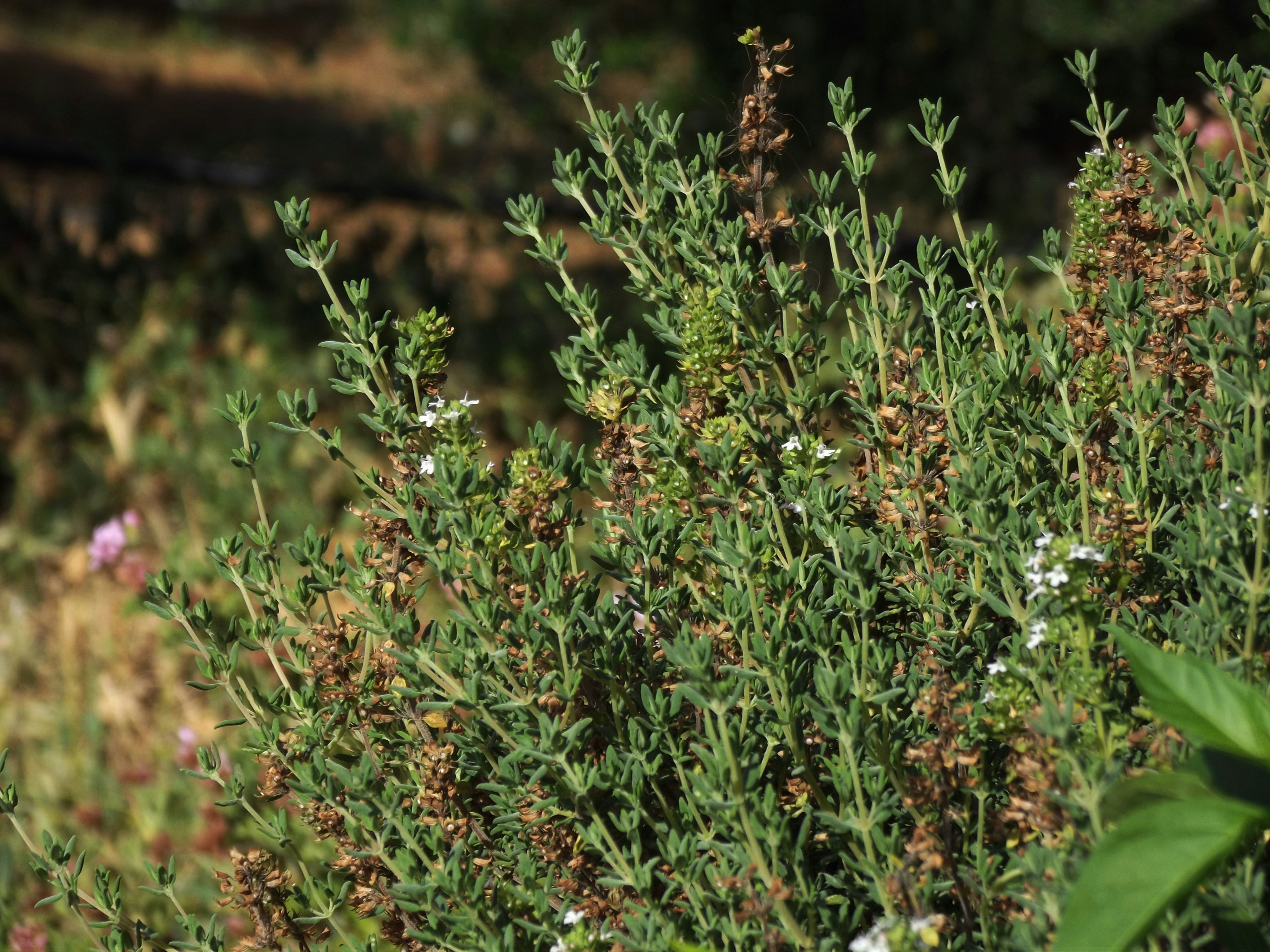
Few aromas capture a Cretan summer quite like wild thyme.
Growing across dry, sun-drenched hillsides, thyme is deeply woven into the island's culinary identity. It flavours local dishes, while its tiny flowers provide nectar for bees and contribute to Crete's celebrated thyme honey.
It is a small plant with an unmistakable presence, a reminder that some of the most characteristic flavours of Crete begin in its wild landscape.
Oregano | Rigani
Oregano is perhaps one of the simplest expressions of the Cretan kitchen.
Dried and crushed, its unmistakable aroma accompanies vegetables, cheeses, salads and grilled dishes, often alongside little more than lemon, sea salt and extra virgin olive oil.
There is a philosophy hidden in that simplicity.
When ingredients come directly from a generous landscape, they don't need to be transformed beyond recognition.
Sometimes, simplicity is enough.
Rosemary | Dendrolivano
With its woody fragrance and resilient character, rosemary feels perfectly at home in Crete's Mediterranean landscape.
Known as dendrolivano, it has traditionally found its place in cooking and everyday aromatic uses. Its warm, resinous scent is instantly recognisable.
Like so many of the island's herbs, rosemary blurs the boundaries between landscape, kitchen and daily ritual.
Following the Rhythm of the Seasons
Of course, the land never remains exactly the same.
Spring covers the hillsides with green growth, wildflowers and aromatic plants. As summer approaches, the colours become warmer and the scent of herbs intensifies beneath the Mediterranean sun. Autumn brings another rhythm, while winter rain allows the landscape to renew itself once again.
For generations, life followed these natural cycles.
You gathered what the land offered when it was ready.
You cooked with what was in season.
You preserved what you could.
And you waited for nature to begin the cycle again.
Today, this idea feels remarkably contemporary.
We call it seasonality, sustainability or slow living.
In Crete, it has simply been a way of life.
Walking as a Way of Understanding
Some landscapes are best experienced from a viewpoint.
Others need to be walked.
Following a trail through the Cretan hills changes the way you notice the land. What initially appears to be dry Mediterranean vegetation gradually reveals itself as something far more intricate.
Aromatic plants appear between stones.
Wildflowers grow beside the path.
The scent changes beneath your feet.
The sea appears and disappears between the hills.
Walking encourages something that modern travel often forgets: attention.
Instead of moving quickly from one attraction to another, you begin noticing smaller things, the texture of a leaf, the scent released when a plant is touched, the sound of insects, the warmth of the earth and the way the light changes across the landscape.
The journey becomes the experience.
The Healing Land at Tella Thera
It is this connection between nature, knowledge and presence that inspired The Healing Land Experience at Tella Thera.
The experience begins not inside the hotel, but on the hill above it.
Guests are invited to walk through the surrounding landscape, discovering the wild herbs and plants that grow naturally in the area and learning about their characteristics, their traditional uses and the stories that have accompanied them through generations.
Rather than simply observing the landscape, the experience encourages you to engage with it.
To touch.
To smell.
To listen.
To understand what has been growing around you all along.
The hillside becomes an open-air introduction to the botanical heritage of Crete, transforming an ordinary walk into a deeper exploration of the relationship between the island and its people.
Suddenly, a plant you might once have passed without noticing has a name.
And with that name comes a story.
From the Hillside to the Cup
The journey eventually slows down.
Following the walk, guests come together for a herbal tea ritual inspired by the plants and traditions explored along the way.
There is something beautifully elemental about it.
Plants.
Water.
Time.
No elaborate ceremony is required.
Instead, it is an invitation to pause, to smell, to taste and to reflect on the landscape you have just walked through.
A simple cup of herbal tea becomes something more meaningful when you understand the land and traditions behind it.
Ancient Knowledge, A Modern Need
Perhaps the most interesting thing about traditional Cretan wisdom is how relevant some of its principles feel today.
Spend time outside.
Eat according to the seasons.
Walk.
Rest.
Share food.
Know where your ingredients come from.
Pay attention to the natural world around you.
None of these ideas are revolutionary.
Perhaps they don't need to be.
As modern life becomes increasingly fast, digital and disconnected from nature, returning to something simple can feel surprisingly luxurious.
Not because we are trying to recreate the past, but because the past can remind us of things we may have forgotten.
A Different Kind of Wellness
At Tella Thera, wellness extends beyond the treatment room.
It can be found during morning yoga, in the stillness of Thaleria Spa, in food shaped by the seasons, in a sunset over Kissamos Bay—and on a hillside where wild herbs continue to grow according to their own rhythm.
The Healing Land Experience is ultimately not about learning the names of plants.
It is about remembering to notice them.
To walk more slowly.
To understand where you are.
To feel the landscape rather than simply look at it.
Because in Crete, the land has always given more than food.
It has offered knowledge, ritual, nourishment and a way of living closely connected to the natural world.
And perhaps that is the oldest form of wellness there is.
.jpg)




.avif)