



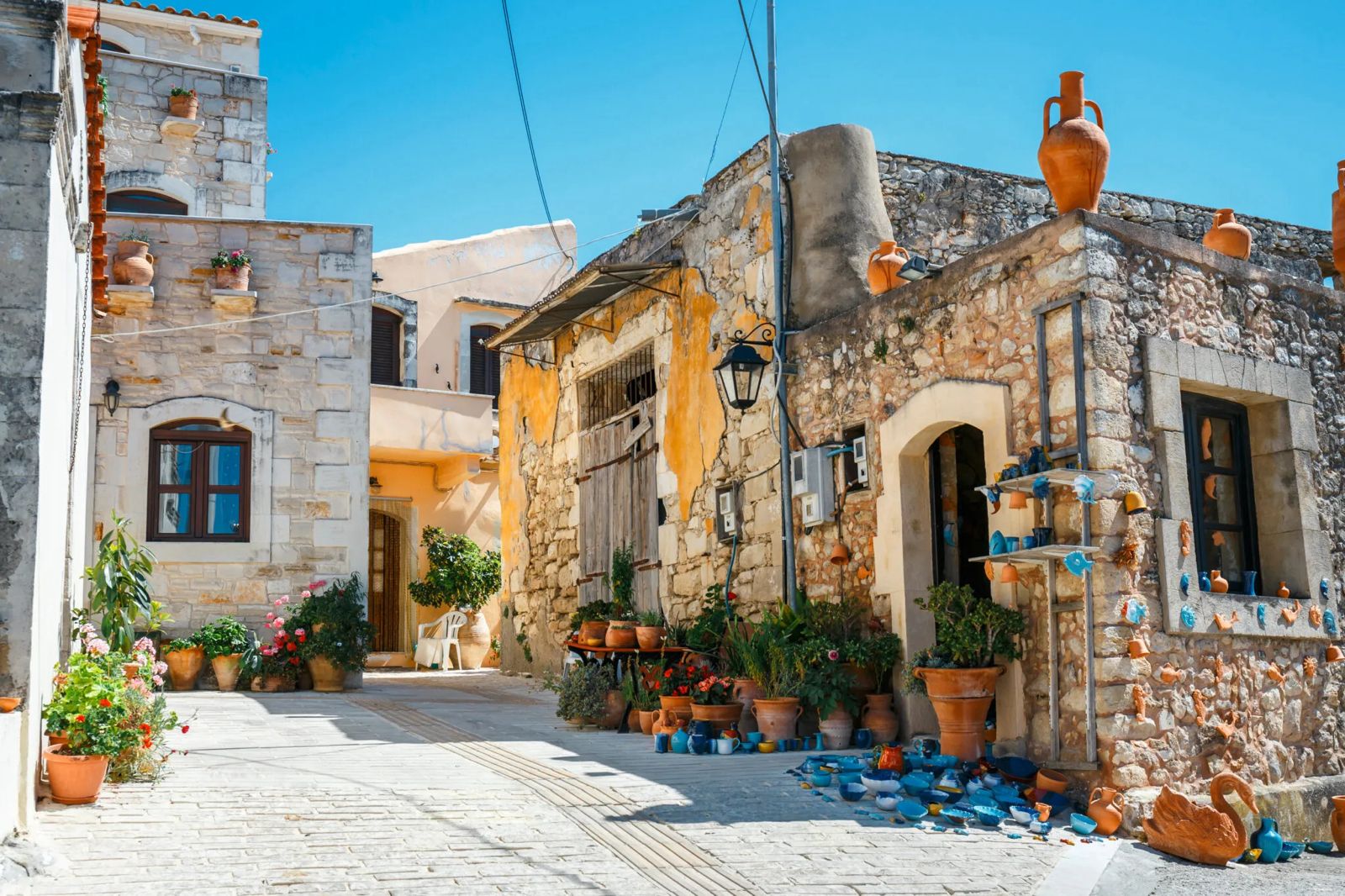

In the village of Margarites, near Rethymno, pottery is not simply a craft, it is part of the cultural fabric of the place.
Known as one of Crete’s historic pottery centers, the village has maintained a centuries-old relationship with clay, a material that has shaped both livelihoods and local identity. For ceramic artisan Giorgis Dalamvelas, who runs Kerameion together with Mariniki, preserving that connection is at the heart of everything they do.
“In this place, tradition has always existed, and clay was the main occupation of the residents from antiquity until today,” he says.
Set in central Crete, close to the foothills of Psiloritis, Margarites developed into an important pottery hub largely because of the land itself. The clay-rich soil of the region made it possible for generations of artisans to build a craft tradition that still survives today.
At Kerameion, that heritage is not treated as a memory of the past, but as a living practice.
“We try to keep every stage of the production process alive,” Giorgis Dalamvelas explains.
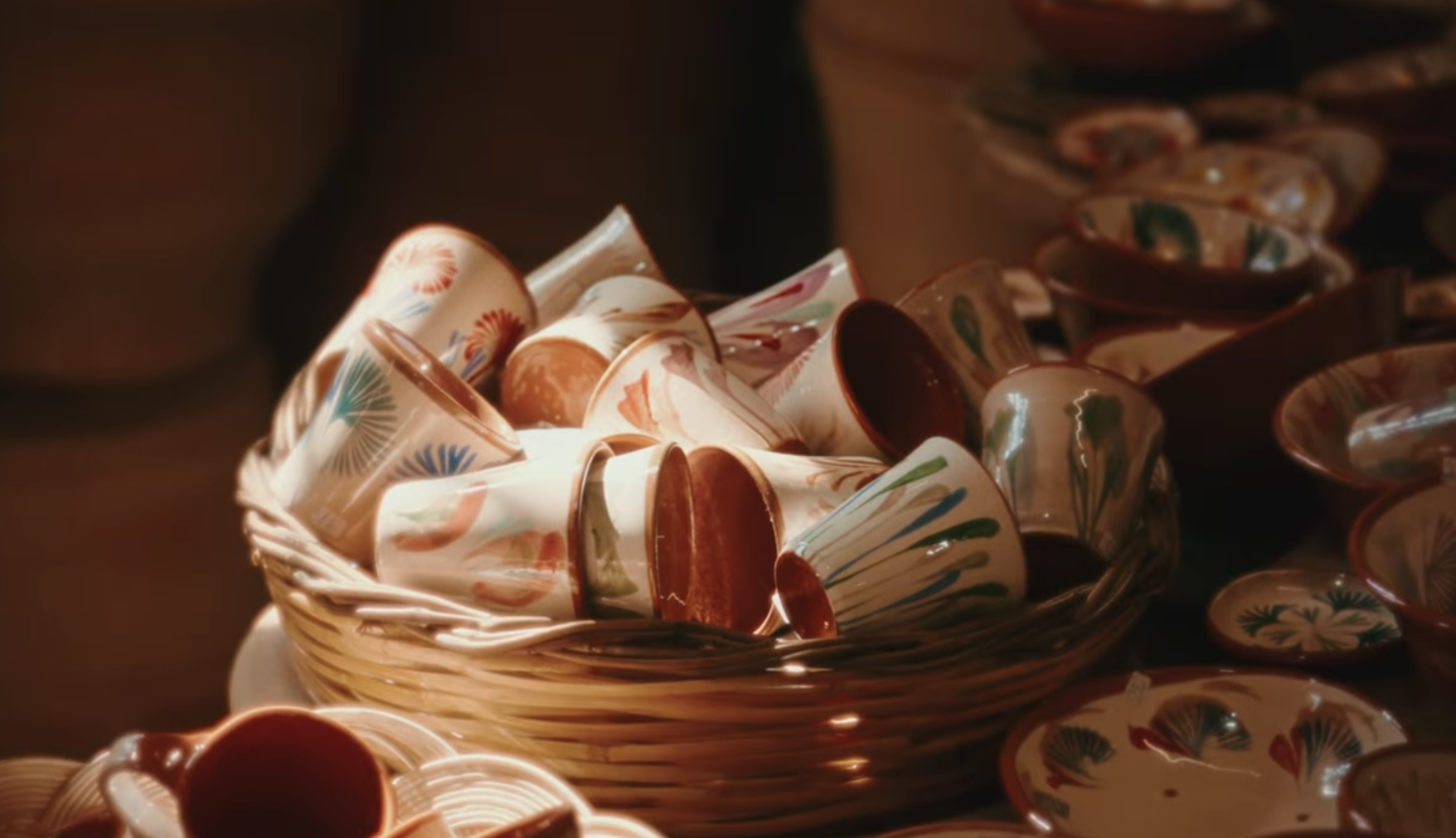
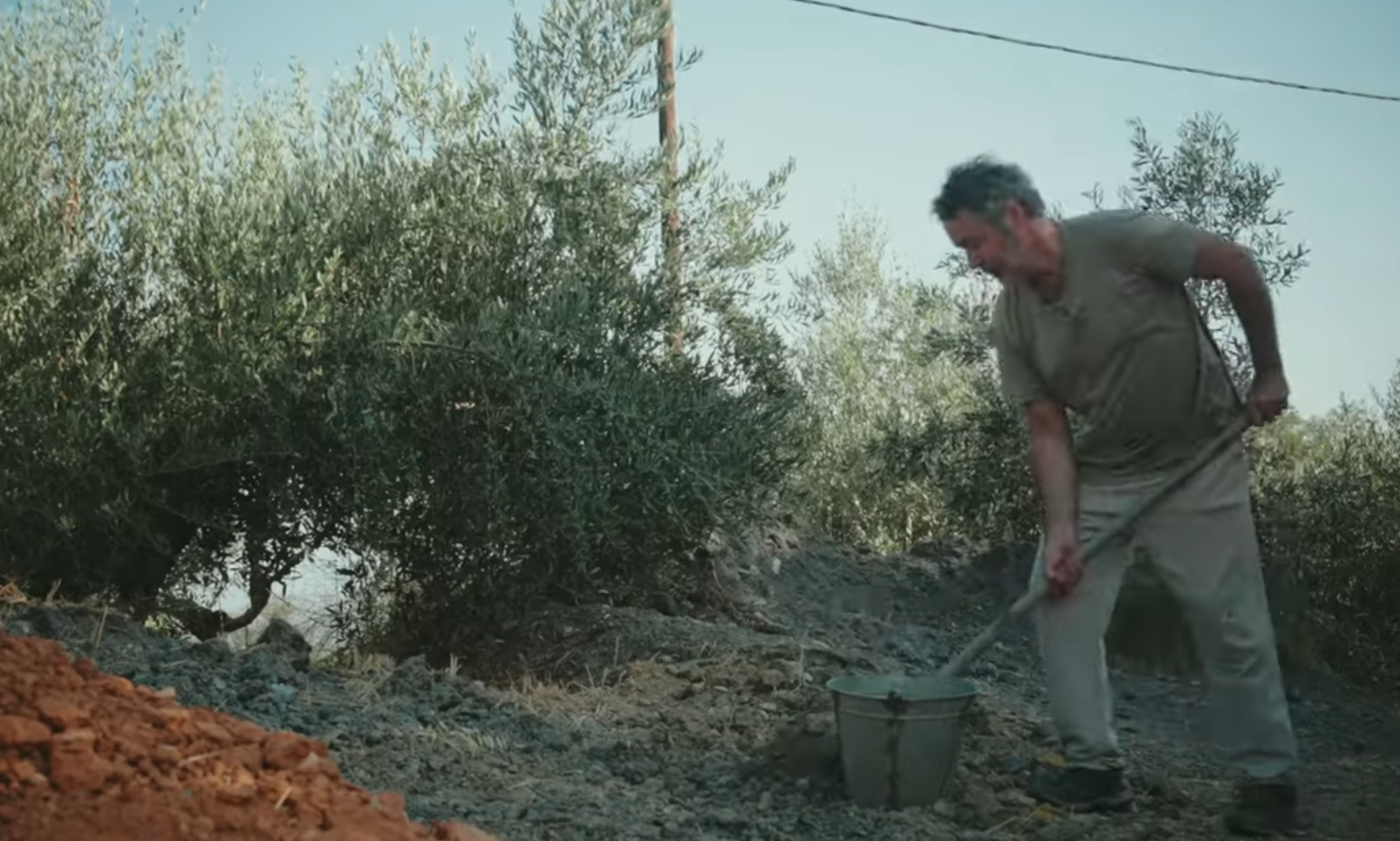
That commitment begins with the raw material itself. Rather than relying solely on commercial sources, the team still collects clay from the Psiloritis area, following the paths once taken by traditional potters. The material is prepared in their outdoor workshop before being shaped into ceramic forms inspired by Crete’s long artistic history.
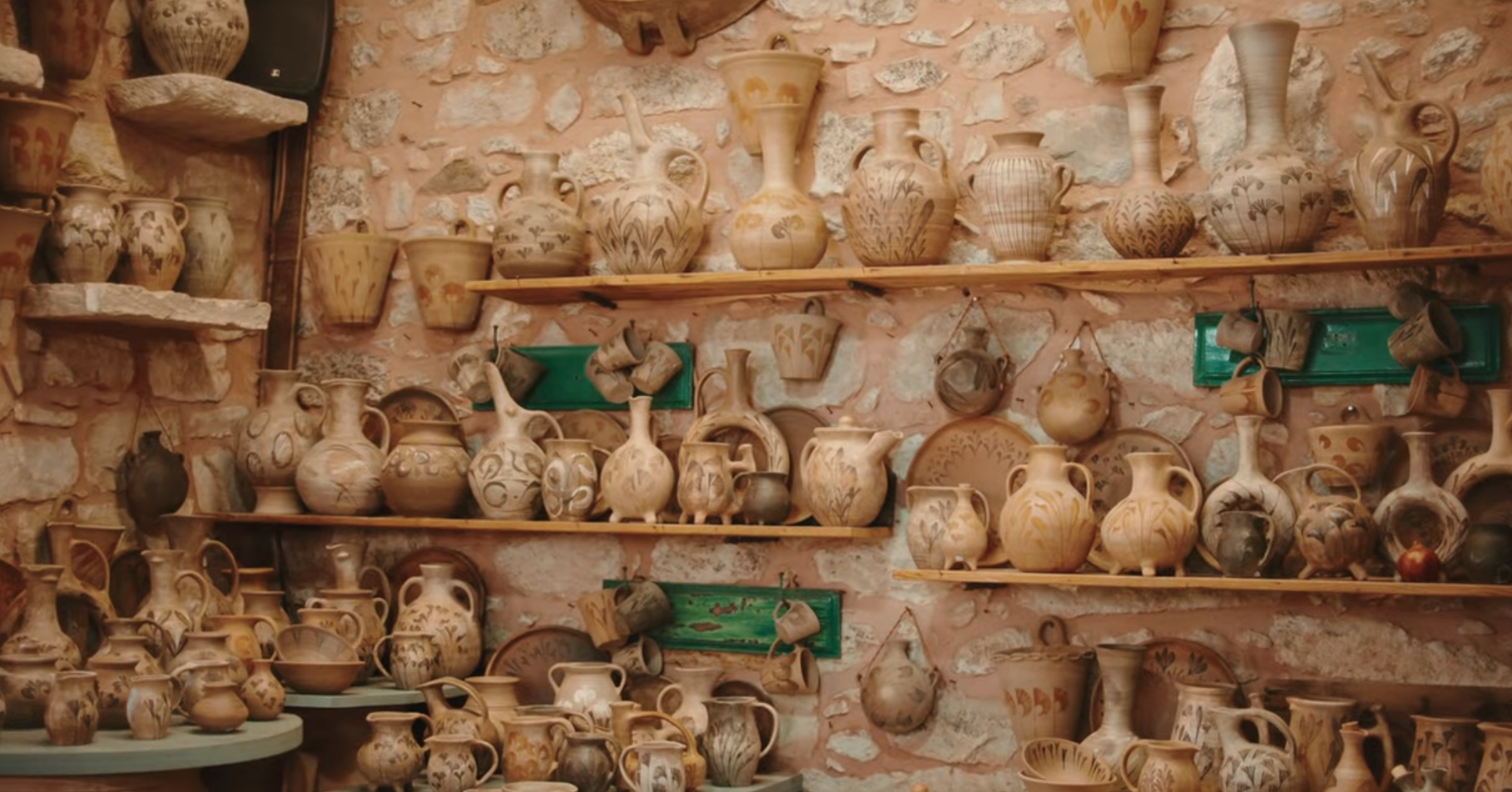
From there, the process remains equally faithful to tradition.
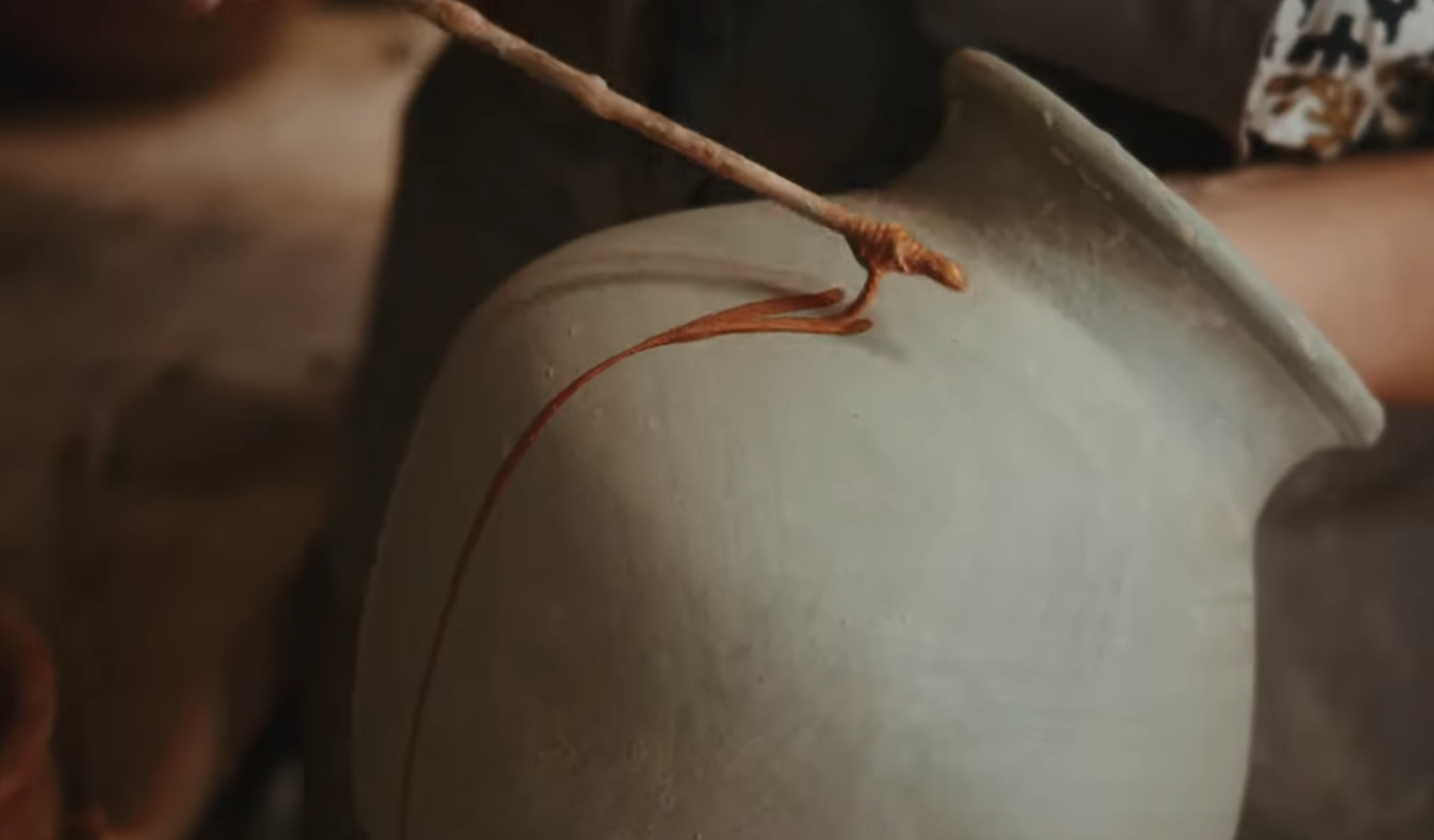
Pieces are polished by hand with pebbles, decorated using natural materials, and eventually fired in wood-burning kilns, where flame and smoke create the distinctive earthy colors that make each piece unique.
“We want to create something authentic, something useful, but also a continuation of the tradition and history of this place,” he says.
That philosophy is what made Kerameion’s collaboration with Tella Thera feel like a natural fit.
According to Giorgis Dalamvelas, when the owners of Tella Thera approached them about incorporating their ceramics into the space, the partnership immediately made sense.
“It was completely compatible with our own way of thinking,” he says, explaining that both sides share a similar respect for nature, materials, and the essence of Crete.
For him, clay carries a meaning that goes beyond craftsmanship.
“Clay comes exclusively from nature, and when it is fired properly, it becomes eternal. It never deteriorates. We will leave, but the ceramics will remain.”
It is perhaps the most powerful reminder of why places like Margarites matter, not simply because they preserve tradition, but because they continue to shape it.
.jpg)




.avif)